



Claudia Hernández
EL UNIVERSAL
La fama de que Playa Sur, en Adicora, estado Falcón, tiene excelentes condiciones para practicar kitesurf, debido a la fuerza de los vientos en esa zona, es conocida nacional e internacionalmente. Así que decidí tomar rumbo a la península de Paraguaná, tras recibir una invitación de dos jóvenes emprendedores y propietarios de Ecoposada 30 Nudos, para conocer su actividad turística. Y para saber por qué esta población es conocida como el Paraíso del Viento.
El show de decenas de velas o cometas multicolores surcando un cielo muy azul es la mejor bienvenida para el visitante al llegar a Adicora. Pero otra experiencia sensorial me esperaba muy cerca de la playa, en la entrada de la población: Ecoposada 30 Nudos.
Después de transitar más de seis horas por carretera desde Barquisimeto, en medio de una vía que cambia de vegetación y de matices, atravesar los Médanos de Coro y encarar la aridez de la región, al llegar a Adicora me impactó un oasis con mucho verdor: Ecoposada 30 Nudos. Sus jardines llenos de enredaderas moradas, trinitarias fucsias y palmeras que danzan con la fuerza del viento, se convirtieron en un bálsamo para mi vista. Pero mi sorpresa aumentó aún más al ver que su moderna estructura, diseñada para integrarse con la naturaleza, está construida con material reciclado.
Sus arquitectos, Juan Carlos Cepeda y Marianella Linares de Cepeda, siguieron la petición de los jóvenes empresarios Francisco Núñez Linares y Alessandro Filippo de desarrollar un proyecto utilizando contenedores marítimos, intervenidos con materiales naturales.
“La mezcla y combinación de los materiales de la zona ha sido la clave para lograr los acabados y ese estilo particular que les aporta una identidad única. Un proyecto alternativo, diferente y, por qué no, ecológico, inmerso en un verde absoluto”, señaló Linares de Cepeda.
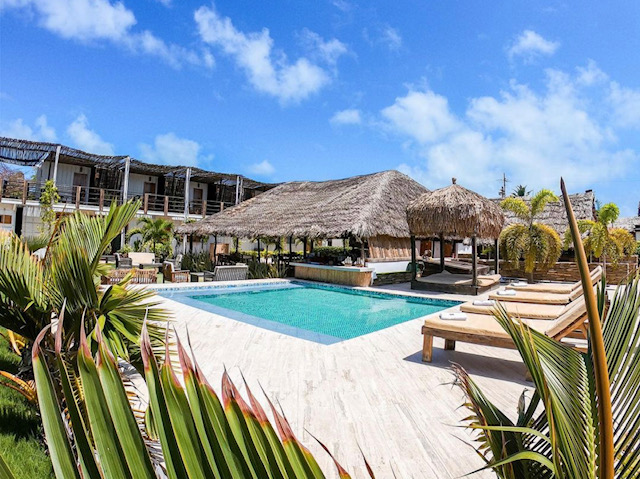
Cada habitación es un contenedor tratado con pintura anticorrosiva blanca y recubierto con madera. Drywall, madera de pino y materiales reciclados dan un toque acogedor a su interior. Hay una hermosa piscina central con mosaicos verdes que conecta todos los usos de la posada, una barra y un restaurante dispuesto debajo de una gran palma tejida o churuata, con piso de arena de mar.
“Nuestro elemento único, el contenedor, queda sumergido dentro de algunos materiales que le dan carácter y calidad ambiental, como madera, piedra, arena y palma, que aportan un estilo singular, inmerso en un verde que logra el equilibrio perfecto”, dijo Linares.
Uno de los empresarios, Francisco Núñez, señaló que los engancharon la pasión por el kitesurf, la cercanía de las costas de Falcón a su residencia en Barquisimeto, las excelentes condiciones que tiene esta población para la práctica del deporte, la paleta de colores a todo lo largo y ancho de su pueblo y del mar que lo rodea, así como la identidad única de los pueblos costeros.
“Cuando empezamos a visitar Adicora para practicar kitesurf nos dimos cuenta de que hacían falta habitaciones, servicios y se nos dio la oportunidad de arrancar con una posada. Investigamos y descubrimos que se pueden hacer cosas increíbles con los contenedores”, indicó Núñez.
Su gerente, Eduard Campos, recuerda todos los aprendizajes que han obtenido desde que empezaron con el proyecto hace cinco años. “Todos los empleados conocen cómo funciona la posada. Hemos aprendido desde hacer una cama hasta labores más difíciles, como arreglar una planta eléctrica”.
Consintiendo el paladar
Disfrutar del exquisito sabor del mar con variedad de langostinos, mariscos y pescados fue mi experiencia culinaria en el restaurante Palapa de la posada.
El chef Cipriano López, de la población El Hato, municipio Falcón, está a cargo de la cocina que no para ni un segundo con los pedidos.
La calidez humana de sus más de 40 colaboradores la demuestran a través del optimismo y sus atenciones. Para el gerente la clave del éxito es la confianza que existe en su equipo, quienes han estado involucrados en el proyecto desde los inicios.
EL UNIVERSAL
La fama de que Playa Sur, en Adicora, estado Falcón, tiene excelentes condiciones para practicar kitesurf, debido a la fuerza de los vientos en esa zona, es conocida nacional e internacionalmente. Así que decidí tomar rumbo a la península de Paraguaná, tras recibir una invitación de dos jóvenes emprendedores y propietarios de Ecoposada 30 Nudos, para conocer su actividad turística. Y para saber por qué esta población es conocida como el Paraíso del Viento.
El show de decenas de velas o cometas multicolores surcando un cielo muy azul es la mejor bienvenida para el visitante al llegar a Adicora. Pero otra experiencia sensorial me esperaba muy cerca de la playa, en la entrada de la población: Ecoposada 30 Nudos.
Después de transitar más de seis horas por carretera desde Barquisimeto, en medio de una vía que cambia de vegetación y de matices, atravesar los Médanos de Coro y encarar la aridez de la región, al llegar a Adicora me impactó un oasis con mucho verdor: Ecoposada 30 Nudos. Sus jardines llenos de enredaderas moradas, trinitarias fucsias y palmeras que danzan con la fuerza del viento, se convirtieron en un bálsamo para mi vista. Pero mi sorpresa aumentó aún más al ver que su moderna estructura, diseñada para integrarse con la naturaleza, está construida con material reciclado.
Sus arquitectos, Juan Carlos Cepeda y Marianella Linares de Cepeda, siguieron la petición de los jóvenes empresarios Francisco Núñez Linares y Alessandro Filippo de desarrollar un proyecto utilizando contenedores marítimos, intervenidos con materiales naturales.
“La mezcla y combinación de los materiales de la zona ha sido la clave para lograr los acabados y ese estilo particular que les aporta una identidad única. Un proyecto alternativo, diferente y, por qué no, ecológico, inmerso en un verde absoluto”, señaló Linares de Cepeda.
Cada habitación es un contenedor tratado con pintura anticorrosiva blanca y recubierto con madera. Drywall, madera de pino y materiales reciclados dan un toque acogedor a su interior. Hay una hermosa piscina central con mosaicos verdes que conecta todos los usos de la posada, una barra y un restaurante dispuesto debajo de una gran palma tejida o churuata, con piso de arena de mar.
“Nuestro elemento único, el contenedor, queda sumergido dentro de algunos materiales que le dan carácter y calidad ambiental, como madera, piedra, arena y palma, que aportan un estilo singular, inmerso en un verde que logra el equilibrio perfecto”, dijo Linares.
Uno de los empresarios, Francisco Núñez, señaló que los engancharon la pasión por el kitesurf, la cercanía de las costas de Falcón a su residencia en Barquisimeto, las excelentes condiciones que tiene esta población para la práctica del deporte, la paleta de colores a todo lo largo y ancho de su pueblo y del mar que lo rodea, así como la identidad única de los pueblos costeros.
“Cuando empezamos a visitar Adicora para practicar kitesurf nos dimos cuenta de que hacían falta habitaciones, servicios y se nos dio la oportunidad de arrancar con una posada. Investigamos y descubrimos que se pueden hacer cosas increíbles con los contenedores”, indicó Núñez.
Su gerente, Eduard Campos, recuerda todos los aprendizajes que han obtenido desde que empezaron con el proyecto hace cinco años. “Todos los empleados conocen cómo funciona la posada. Hemos aprendido desde hacer una cama hasta labores más difíciles, como arreglar una planta eléctrica”.
Consintiendo el paladar
Disfrutar del exquisito sabor del mar con variedad de langostinos, mariscos y pescados fue mi experiencia culinaria en el restaurante Palapa de la posada.
El chef Cipriano López, de la población El Hato, municipio Falcón, está a cargo de la cocina que no para ni un segundo con los pedidos.
La calidez humana de sus más de 40 colaboradores la demuestran a través del optimismo y sus atenciones. Para el gerente la clave del éxito es la confianza que existe en su equipo, quienes han estado involucrados en el proyecto desde los inicios.
Siguenos en
Telegram,
Instagram,
Facebook y
Twitter
para recibir en directo todas nuestras actualizaciones