


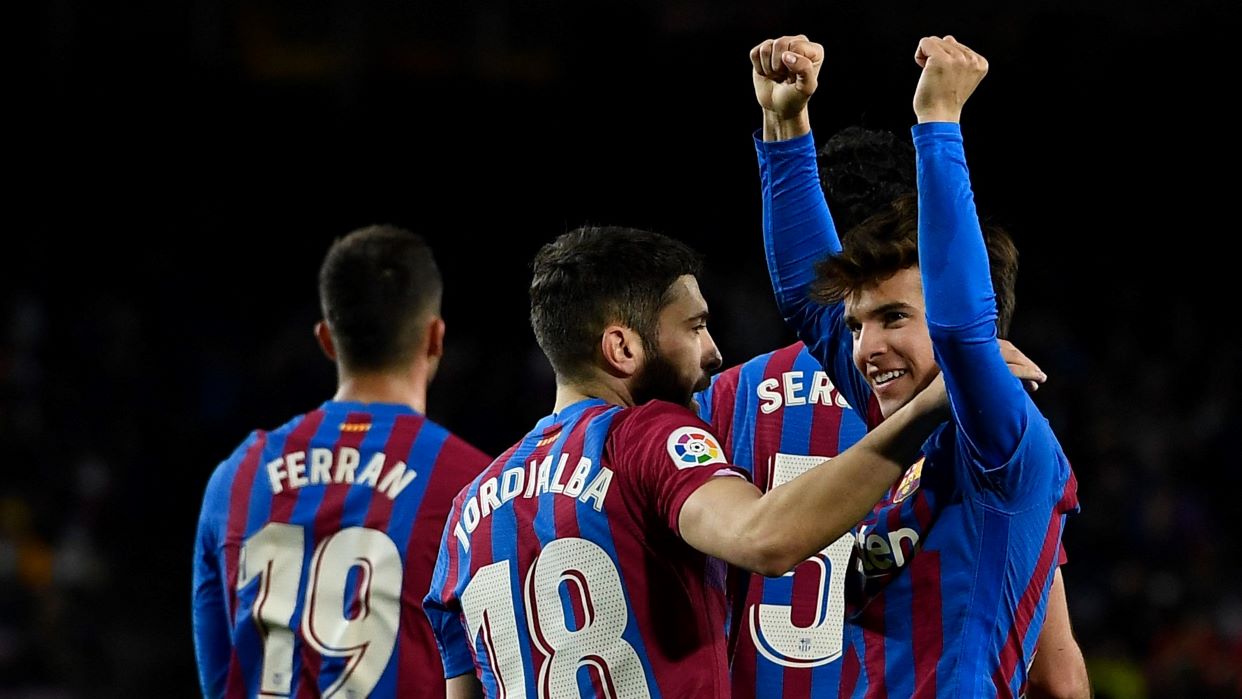

Madrid.- El FC Barcelona goleó por 4-0 a Osasuna (11º), este domingo en la 28ª jornada de LaLiga, y recuperó la tercera plaza que había perdido de forma provisional el sábado, tras la victoria del Atlético de Madrid, de nuevo cuarto, sobre el Cádiz (18º), por 2-1, informó AFP.
El equipo catalán, empatado a puntos con el Atlético, se coloca a doce del líder Real Madrid, que juega el lunes en Mallorca (16º), y a cinco del Sevilla, segundo, que empató este domingo (1-1) en campo del Rayo Vallecano (13º).
Tres días después de haber sido empatado (0-0) en casa por el Galatasaray turco, en el partido de ida de octavos de final de la Europa League, el Barcelona reencontró el rumbo.
Ferran Torres, que logró un doblete, anotó primero de penal, tras una jugada de Gavi (14), y amplió su cuenta personal con el segundo tras un pase del francés Ousmane Dembélé (21).
Dembelé ofrecería una segunda asistencia al gabonés Pierre-Emerick Aubameyang (27), antes de que Riqui Puig cerrara la cuenta (76) para el Barcelona.
Por su parte, el Sevilla dio un paso atrás en sus aspiraciones de conquistar el título después de su empate (1-1) en la cancha del Rayo Vallecano.
Para los hombres de Julen Lopetegui fue su sexto empate en sus últimos ocho partidos del torneo de la regularidad, y comienzan a ver amenazado su segundo puesto por Barcelona y Atlético de Madrid.
El portugués Bebé adelantó al conjunto de la franja (46), que llegaba de seis derrotas seguidas, mientras que el danés Thomas Delaney (63) igualó para el Sevilla.
Al Sevilla le queda al menos la opción de la Europa League, cuya final se disputará en la capital andaluza, en el estadio Ramón Sánchez Pizjuán.
En la ida de octavos de final el Sevilla derrotó el jueves 1-0 al West Ham inglés.
Resultados de los partidos de la 28ª jornada del campeonato de fútbol de España:
- Viernes:
Atlético de Madrid - Cádiz 2 - 1
- Sábado:
Levante - Espanyol 1 - 1
Granada - Elche 0 - 1
Villarreal - Celta 1 - 0
Getafe - Valencia 0 - 0
- Domingo:
Rayo - Sevilla 1 - 1
Betis - Athletic 1 - 0
Real Sociedad - Alavés 1 - 0
Barcelona - Osasuna 4 - 0
El equipo catalán, empatado a puntos con el Atlético, se coloca a doce del líder Real Madrid, que juega el lunes en Mallorca (16º), y a cinco del Sevilla, segundo, que empató este domingo (1-1) en campo del Rayo Vallecano (13º).
Tres días después de haber sido empatado (0-0) en casa por el Galatasaray turco, en el partido de ida de octavos de final de la Europa League, el Barcelona reencontró el rumbo.
Ferran Torres, que logró un doblete, anotó primero de penal, tras una jugada de Gavi (14), y amplió su cuenta personal con el segundo tras un pase del francés Ousmane Dembélé (21).
Dembelé ofrecería una segunda asistencia al gabonés Pierre-Emerick Aubameyang (27), antes de que Riqui Puig cerrara la cuenta (76) para el Barcelona.
Por su parte, el Sevilla dio un paso atrás en sus aspiraciones de conquistar el título después de su empate (1-1) en la cancha del Rayo Vallecano.
Para los hombres de Julen Lopetegui fue su sexto empate en sus últimos ocho partidos del torneo de la regularidad, y comienzan a ver amenazado su segundo puesto por Barcelona y Atlético de Madrid.
El portugués Bebé adelantó al conjunto de la franja (46), que llegaba de seis derrotas seguidas, mientras que el danés Thomas Delaney (63) igualó para el Sevilla.
Al Sevilla le queda al menos la opción de la Europa League, cuya final se disputará en la capital andaluza, en el estadio Ramón Sánchez Pizjuán.
En la ida de octavos de final el Sevilla derrotó el jueves 1-0 al West Ham inglés.
Resultados de los partidos de la 28ª jornada del campeonato de fútbol de España:
- Viernes:
Atlético de Madrid - Cádiz 2 - 1
- Sábado:
Levante - Espanyol 1 - 1
Granada - Elche 0 - 1
Villarreal - Celta 1 - 0
Getafe - Valencia 0 - 0
- Domingo:
Rayo - Sevilla 1 - 1
Betis - Athletic 1 - 0
Real Sociedad - Alavés 1 - 0
Barcelona - Osasuna 4 - 0
Siguenos en
Telegram,
Instagram,
Facebook y
Twitter
para recibir en directo todas nuestras actualizaciones