


Presidente del TSJ realizó donaciones en diferentes Hospitales de Caracas
Durante las jornadas, el Magistrado expresó su agrado con estas entregas de juguetes a los niños y niñas de estos centros hospitalarios, al tiempo que aseguró que estas actividades continuarán como parte de la labor que impulsa desde el Poder Judicial


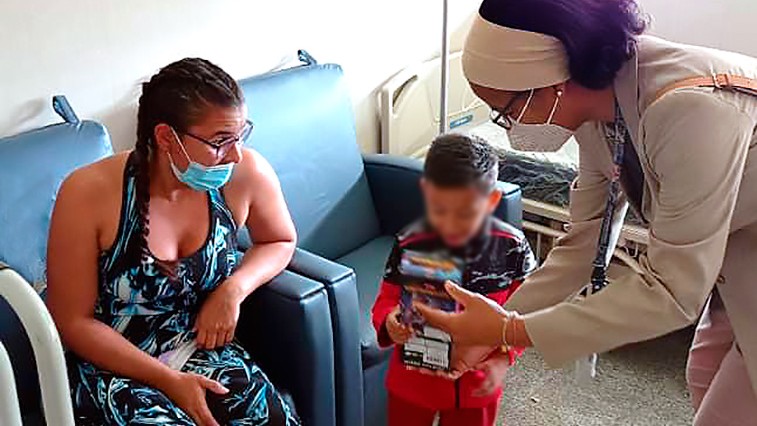

Caracas.- Como parte de las políticas de bienestar y acompañamiento social que adelanta el presidente del Tribunal Supremo de Justicia (TSJ), magistrado Maikel Moreno, hizo entrega de una serie de donaciones destinadas a los niños y niñas internos en el Hospital Dr. Domingo Luciani y en la Fundación Hospital Ortopédico Infantil; en aras de robustecer las acciones de bienestar impulsadas bajo la gestión de la máxima autoridad del Poder Judicial.
Durante las jornadas, el Magistrado expresó su agrado con estas entregas de juguetes a los niños y niñas de estos centros hospitalarios, al tiempo que aseguró que estas actividades continuarán como parte de la labor que impulsa desde el Poder Judicial, en el marco social, para contribuir con el buen vivir de la población venezolana.
En todas las actividades, realizadas en coordinación con la Fundación Gaceta Judicial del Tribunal Supremo de Justicia, se cumplieron de forma rigurosa con los protocolos especiales de seguridad e higiene para prevenir contagios por Covid-19.
Durante las jornadas, el Magistrado expresó su agrado con estas entregas de juguetes a los niños y niñas de estos centros hospitalarios, al tiempo que aseguró que estas actividades continuarán como parte de la labor que impulsa desde el Poder Judicial, en el marco social, para contribuir con el buen vivir de la población venezolana.
En todas las actividades, realizadas en coordinación con la Fundación Gaceta Judicial del Tribunal Supremo de Justicia, se cumplieron de forma rigurosa con los protocolos especiales de seguridad e higiene para prevenir contagios por Covid-19.
Siguenos en
Telegram,
Instagram,
Facebook y
Twitter
para recibir en directo todas nuestras actualizaciones