


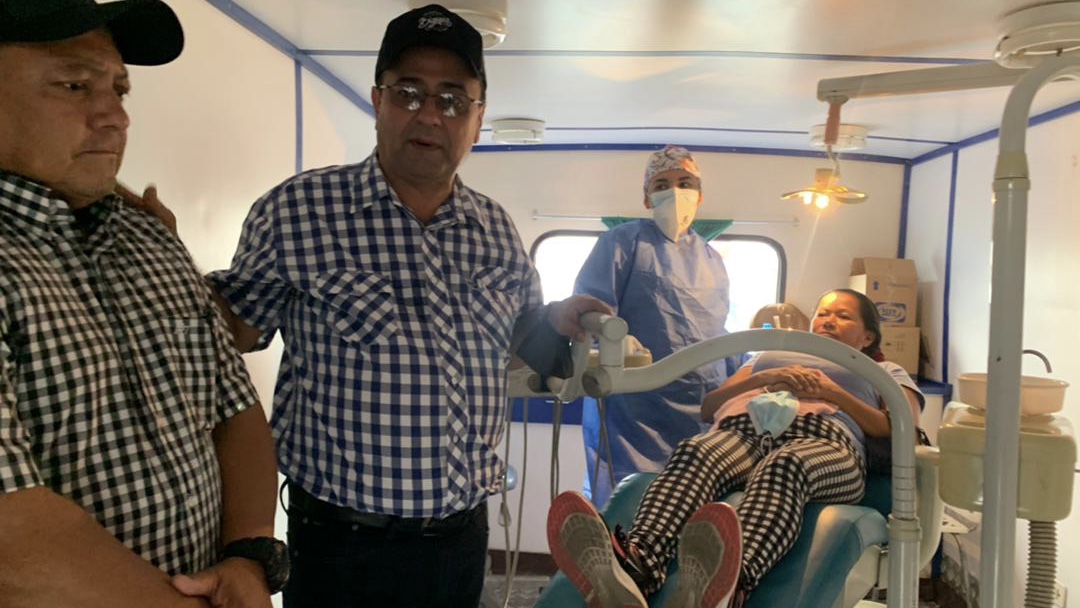

Barinas.- Un operativo integral con atención médica y alimentos, organizado por la Gobernación de Barinas en la comunidad de Guanapa, sirvió para que los ciudadanos y los representantes del tren ejecutivo sostuvieran un gran encuentro, aparte de las atenciones brindadas por el equipo asistencial.
Medicina general, asistencia pediátrica, obstetricia, odontología, venta de hortalizas y entrega de medicamentos, contempló la actividad que reunió a una gran cantidad de vecinos quienes pudieron cubrir necesidades básicas, como por ejemplo, conocer la opinión de especialistas en materia de salud sobre sus condiciones particulares.
Las personas con discapacidades que requerían bastones y otros elementos para mejorar sus desplazamientos, también recibieron la ayuda de parte del gobierno de Barinas. Los niños se divirtieron y hasta cortes de cabellos lograron realizar de forma gratuita.
Medicina general, asistencia pediátrica, obstetricia, odontología, venta de hortalizas y entrega de medicamentos, contempló la actividad que reunió a una gran cantidad de vecinos quienes pudieron cubrir necesidades básicas, como por ejemplo, conocer la opinión de especialistas en materia de salud sobre sus condiciones particulares.
Las personas con discapacidades que requerían bastones y otros elementos para mejorar sus desplazamientos, también recibieron la ayuda de parte del gobierno de Barinas. Los niños se divirtieron y hasta cortes de cabellos lograron realizar de forma gratuita.
Siguenos en
Telegram,
Instagram,
Facebook y
Twitter
para recibir en directo todas nuestras actualizaciones