



Sandino Ignacio Yaguare
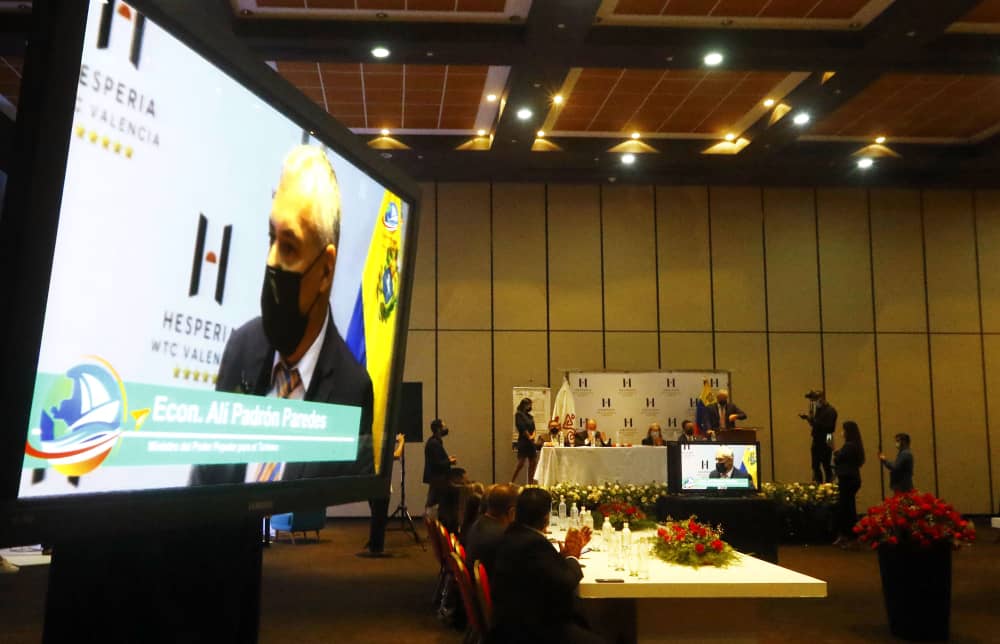
“Flexibilización de noviembre y diciembre ayudará a prosperar al sector turismo en Venezuela”, fueron parte de las declaraciones del ministro de Turismo Alí Padrón en el Congreso Mundial de Turismo realizado en las instalaciones del Hotel Hesperia WTC Valencia, cuyo lema fue “Resilencia, innovación y sostenibilidad”.
El evento avalado por Unesco Venezuela, fue organizado por el Centro Iberoamericano de Altos Estudios en Hotelería y Turismo (Ciaeht), con el aval de la Universidad Pedagógica Experimental Libertador (Upel) y contó con la conexión de 3000 personas de 20 países.
A la instalación del encuentro asistieron las autoridades únicas de Turismo de los estados Carabobo, Yaracuy, Falcón, Cojedes, Lara, Aragua, Miranda, Portuguesa y Distrito Capital.
Sobre la reactivación del sector turismo, uno de los más afectados económicamente por la pandemia, se mostró esperanzado, “tenemos una expectativa muy positiva en la ocupación hotelera, en la participación de las comunidades turísticas organizadas, en el sector privado y en el trabajo cohesionado, para poder avanzar en medio de un desafío”.
Padrón aseguró que el semáforo de acceso a hoteles y restaurantes para el control de la pandemia será obligatorio para ingresar en los establecimientos, “es un elemento que nos va a proteger, tanto a las personas que trabajan como las que hacen visita”.
Durante su intervención se refirió al turismo rural como alternativa para el reimpulso económico postpandemia.
“Estamos planteando el turismo rural ante ese gran desafío que ha significado para la humanidad la pandemia del coronavirus, el desarrollo del turismo rural, el agroturismo, el etnoturismo, que son elementos que incluyen a las poblaciones rurales”, indicó.
Como parte de la apertura progresiva al turismo internacional, Padrón destacó la cifra alcanzada de unos 4000 mil turistas rusos que han visitado principalmente la isla de Margarita y Canaima.
Otras intervenciones importantes durante el congreso fueron: Nancy Malave,de Ecuador, sobre la sostenibilidad cultural, con base en sus experiencias en la Amazonía; la colombiana Florinda Pargas, sobre el pensamiento disruptivo 4.0 y prospectiva estratégica; Naed Vera, de Costa Rica, presentó una ponencia en relación con la resiliencia como método fundamental para afrontar la nueva normalidad post pandemia.
Sector turístico privado
El presidente de la Cámara Hotelera del estado Carabobo, Carlos Oroño expresó su satisfacción por la calidad de expositores nacionales e internacionales durante el congreso “estamos agradecidos por la excelente disertación y alto nivel profesional en las ponencias, que engrandece las experiencias del turismo a nivel mundial, con temas de turismo rural, sostenible, procesos de capacitación y sensibilización, que garantiza la calidad en el servicio turístico”.
Mostró su acuerdo con la aplicación del método del semáforo en hoteles “la puesta en marcha del semáforo, representa un mecanismo de precaución que puede permitir el incremento de los usuarios a las diferentes instalaciones, garantizando un nivel de bio seguridad más asertivo. Debemos entender, que la actual situación de salud generada por la pandemia, requiere de tiempos prolongados para su recuperación”.
Oroño informó que los hoteles han tenido un crecimiento paulatino, “los porcentajes de ocupación del mes de octubre del 2021 cerraron con un 20% más que los obtenidos en 2020. Consideramos que estamos viendo una reactivación de la economía, proceso que benéfica a toda la población ya que genera mayor porcentaje de bienestar social”.
Siguenos en
Telegram,
Instagram,
Facebook y
Twitter
para recibir en directo todas nuestras actualizaciones